Specifications
Weight (KG): 1.15
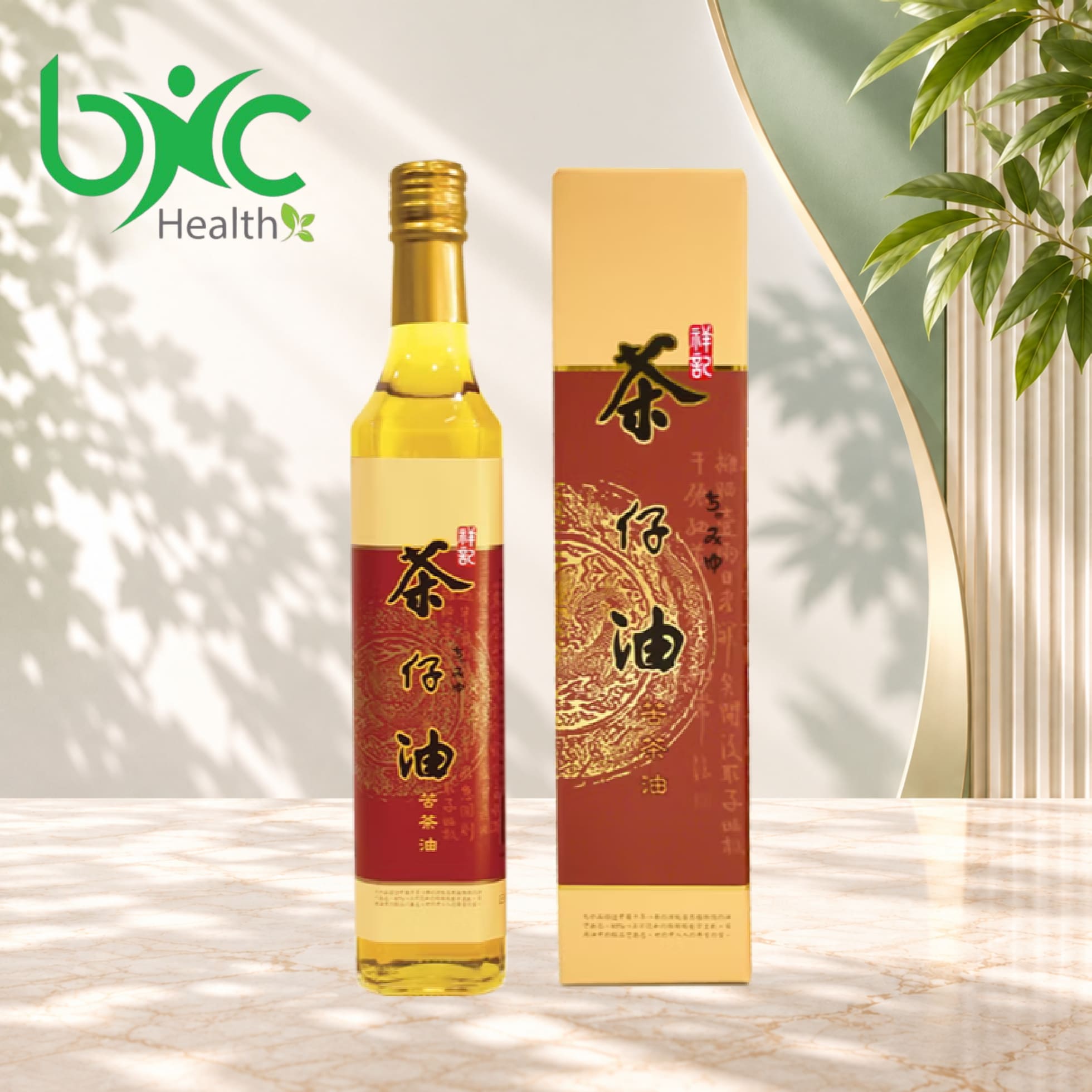
Camellia Oil(Shangi)。
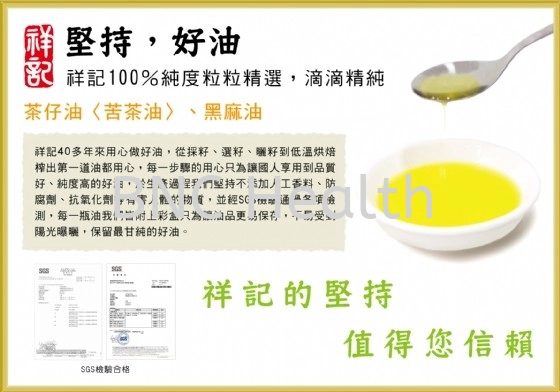
Camellia Oil (Shangi)—carefully crafted at every step to bring you only the purest, finest oil.
Non-steroidal anti-inflammatory drugs (NSAIDs), such as ketoprofen, are commonly used clinically to relieve pain and inflammation. Research indicates that gastrointestinal ulcers and mucosal tissue damage are associated with lipid peroxidation and oxidative stress. Therefore, using natural antioxidants to protect gastrointestinal mucosal cells against oxidative damage is one of the research strategies for gastrointestinal health. Camellia oil (Camellia oleifera Abel.) is a commonly used edible oil in Taiwan. In traditional folk remedies, it is believed to offer various health benefits, including regulating intestinal function, strengthening the stomach, moistening the lungs and clearing the liver. However, scientific evidence supporting these claims remains insufficient.
During the preliminary screening of camellia oil samples (A–E) in this study, sample D demonstrated good antioxidant activity and the ability to scavenge reactive oxygen species, suggesting that it may prevent oxidative damage to the gastrointestinal mucosa. This study therefore further investigated the protective effects of camellia oil against ketoprofen-induced gastrointestinal mucosal injury through in vitro experiments and in vivo animal experiments.
The results showed that camellia oil, at concentrations of 25–75 μg/mL, increased the gene expression and activity of antioxidant enzymes, including glutathione peroxidase (GPx), heme oxygenase-1 (HO-1) and superoxide dismutase (SOD), in Int-407 cells.
It also increased the secretion of vascular endothelial growth factor (VEGF) and prostaglandin E2 (PGE2), and significantly promoted the migration of human intestinal Int-407 cells. These findings suggest that camellia oil may possess antioxidant properties and promote ulcer wound healing.
Further experiments found that feeding Sprague-Dawley (SD) rats camellia oil (1, 2 and 4 mL/kg) for 21 days before inducing injury with ketoprofen (100 mg/kg) inhibited the gene expression of the inflammation-related factor COX-2. It also inhibited nitric oxide (NO) and interleukin-6 (IL-6). In addition, feeding the camellia oil sample reduced ketoprofen-induced oxidative damage to the intestinal mucosa and increased the activity of antioxidant enzymes, including glutathione peroxidase (GPx), glutathione S-transferase (GST) and superoxide dismutase (SOD). Its effects were better than those observed in the lansoprazole control group.
Further examination of animal tissue histopathological sections showed that the camellia oil-fed group was protected against ketoprofen-induced gastrointestinal mucosal injury. Taken together, the findings of this study confirmed that camellia oil could prevent and counteract oxidative damage to the gastrointestinal mucosa and help improve the competitiveness of Taiwan’s agricultural products.